

-
 StakeBonus for new players from 200% to $1000

In the growing domain of online casino games, Gates of Olympus slot has emerged as a notable contender, offering players a transcendent journey through the mythical realms of ancient Greek deities. This digital adventure, curated by Pragmatic Play, intertwines the allure of potential fortune with the enchanting narratives of ancient mythology, creating a gaming experience that is both visually and financially compelling.
| 🎮 Game name | Gates of Olympus |
| 🏢 Provider | Pragmatic Play |
| 🕹️Game type | Video slots |
| ➡️ Paylines | 20 |
| 🌋 Volatility | super high |
| 🔄 RTP (return to player) | 96,5% |
| 🚀 Maximum Multiplier | 5000x |
| 🌀 Reels x Lines | 5×6 |
| 🌟 Features | Tumble Feature, Free Spins Feature, Ante Bet Feature, Bonus Buy |
How does Gates of Olympus work?
The Gates of Olympus game is not just a visual spectacle, but a complex and engaging slot that offers substantial opportunities for significant financial winnings. With cascading reels and 20 paylines, the game mechanics are designed to ensure an immersive and potentially profitable gaming experience. The inclusion of features such as multipliers and free spins, along with the Ante Bet feature, offers players strategic opportunities to maximize their winnings, navigating the divine realms with luck and tactical gameplay in their favor.
Symbolism in gameplay
The Gates of Olympus symbols play a fundamental role in the game's narrative and mechanics. Each symbol, from the majestic crowns to the ethereal chalices, is meticulously crafted to fit the game's ancient Greek theme. Gates of Olympus symbols not only serve as visual markers, but also as integral components of the game's payout structure. Their appearance and combinations on the reels determine the potential rewards for players.

Game Mechanics: A seamless integration of features
Gates of Olympus gameplay is characterized by a series of features that increase player engagement. Cascading reels, multipliers and the Ante Bet feature are intricately integrated into the gameplay, offering players strategic opportunities to maximize their potential winnings. Gameplay is designed to be intuitive for newcomers and challenging for experienced players, striking a balance that appeals to a wide audience.
The Scatter Feature: A gateway to the bonus rounds
The Gates of Olympus scatter has a dual purpose. Visually, it aligns with the game's theme, representing a divine artifact. Mechanically, it acts as a trigger for the game's bonus rounds. When players land a specific number of scatter symbols on the reels, they are taken to the bonus rounds where they have the opportunity to secure enhanced rewards.
-
Sign up bonusNew players receive 100% of the deposit amount, but no more than R$ 200 *T&C ApplyGood odds when betting on popular sporting events Convenient and fast cash withdrawal Excellent mobile version of the site Slots from top providersEstrela BetJoin Now
-
Sign up bonusNew customers are entitled to a deposit bonus of 100% up to €100 *T&C Applycasino with a large number of users and a good reputation good chances availability of modern slots and other casino gamesBetanoJoin Now


Gates of Olympus RTP
The RTP of slot Gates of Olympus is set at 96.5%. This percentage implies that, theoretically, for every US$ 100 wagered, the slot will return US$ 96.50 over an extended period of play. However, it is essential to note that the RTP provided is a theoretical value, calculated based on a large number of spins, and does not offer any guarantee of winnings in individual gaming sessions. Therefore, while RTP can serve as a useful tool for evaluating potential slot machine profitability, players should approach gambling with an understanding of the inherent unpredictability and risk associated with slot machine games.
User experience: A divine interface
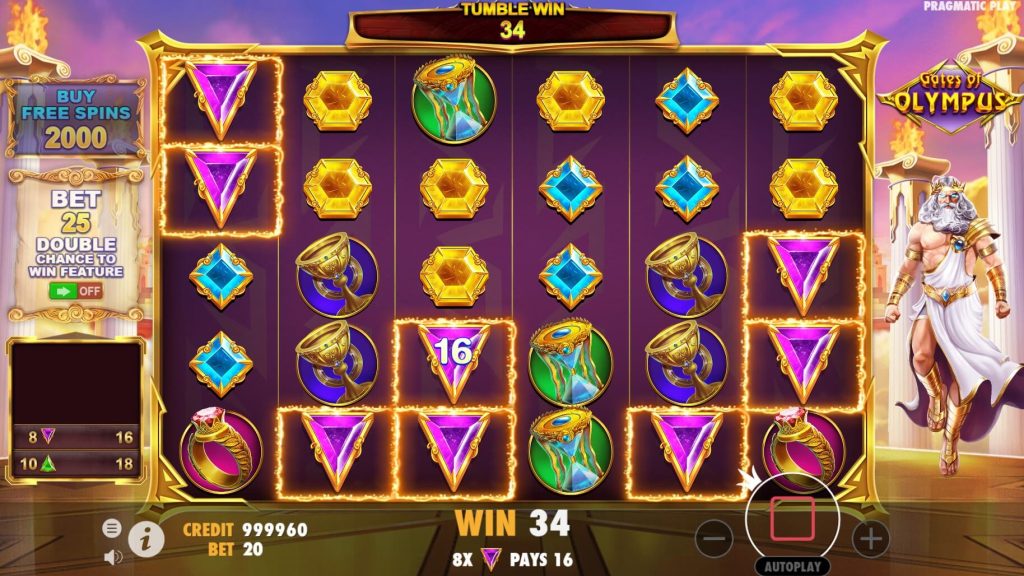
In the competitive realm of online slot games, Pragmatic Play's Gates of Olympus has created a distinct niche, captivating players with its ethereal design and immersive visual experience. The slot machine, which is deeply rooted in the rich tapestry of Greek mythology, seamlessly blends divine aesthetics with sophisticated gaming technology.
Gates of Olympus slot, developed by Pragmatic Play, invites players to traverse a mythical kingdom, where the omnipotent Zeus himself presides over their fortune. The design elements are meticulously crafted, intertwining the allure of ancient Greek mythology with the thrill of modern slot games. The 6×5 grid, set against the backdrop of the majestic Mount Olympus, is adorned with symbols reminiscent of the era, including crowns, chalices and precious stones, each meticulously designed to reflect the opulence and grandeur of the gods.
Choosing to play Gates of Olympus is to immerse yourself in a mythical narrative, where each spin reveals a new chapter of potential fortune and heavenly favor. The game, with its user-friendly interface and diverse range of bets, guarantees accessibility for both experienced players and novices. Furthermore, its multi-device compatibility ensures that the gates of this divine realm can be accessed anytime, from anywhere, offering a versatile Gates of Olympus online casino experience.
In the Gates of Olympus slot Indonesia, Pragmatic Play has successfully fused aesthetic allure with gaming sophistication, creating a slot that is not just a game, but a journey through a visually stunning mythical landscape. The design elements are not just a backdrop, but are an integral part of the overall game experience, ensuring that every spin is not just a mechanical function, but a step on a divine and heavenly journey.

How to create an account and start playing Gates of Olympus
Follow 5 simple steps to create an account:
- Step 1: Creating an account. When exploring the Gates of Olympus website, potential players will find an option to create an account. The account creation process typically requires you to provide basic information such as your email address, secure password and other personal details, ensuring your journey through the celestial realms is secure and personalized.
- Step 2: Secure login Gates of Olympus. With a successfully created account, players can use their credentials to perform a Gates of Olympus login.
- Step 3: Game Start. After logging in, players will have access to the Gates of Olympus online slot. Before embarking on your journey, be sure to explore the various betting options available, aligning your celestial explorations with your earthly budget.
- Step 4: Identity Verification. The casino may require you to verify your identity before making deposits and withdrawals. This usually involves providing a copy of your ID and proof of address.
- Step 5: Deposit. Once your account is created and verified, make a deposit using one of the payment methods accepted by the casino. Then you will have access to the Gates of Olympus game.
-
Sign up bonusBonus for new players from 200% to $1000StakeJoin Now

Strategies and earning possibilities
The max win Gates of Olympus offers is 5000x the initial bet, a number that has undoubtedly contributed to the slot's popularity among novice and experienced players alike. But the question that always remains in the minds of many is: how to guarantee a victory?
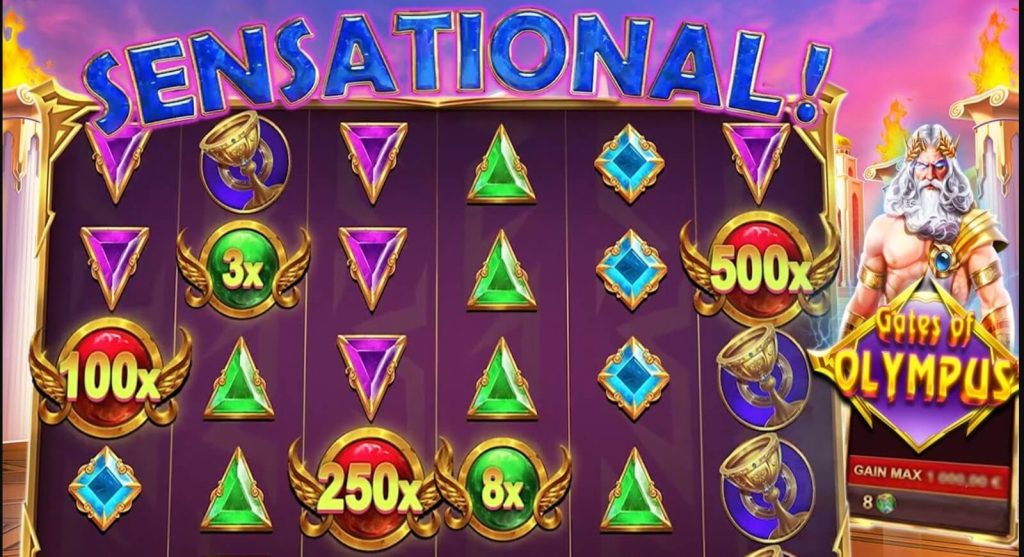
Gates of Olympus jackpot offers are often the focus of players' strategies. The slot, developed by Pragmatic Play, features a 6x5 grid and utilizes a pay anywhere mechanic, offering 20 paylines that can lead to significant wins, including Gates of Olympus's coveted 500x jackpot. The symbols, ranging from Zeus himself to various precious stones, have different values and their combinations on the reels determine the payout. Multipliers, symbolized by golden spheres, can significantly increase winnings, offering up to Gates of Olympus x500 bet and are therefore a crucial element to consider in gaming strategy.
Gates of Olympus does pay, especially when players successfully navigate its various features, such as the free spins, which are triggered by scatter symbols and can lead to substantial wins, including the thumbnail Gates of Olympus 100x. However, it is imperative to approach gambling with the understanding that although the potential for significant winnings exists, slots are inherently games of chance and as such, results cannot be accurately predicted.
A mini-guide on slot multipliers
The Gates of Olympus Mega Jackpot is one of the most coveted aspects of the game, offering players the chance to secure a monumental win that can turn a modest bet into a divine payout. This jackpot is the pinnacle of potential winnings.
The logo x500 Gates of Olympus multiplier is another spectacular feature that players ardently seek. This multiplier, when activated, can increase winnings by 500 times.
Gates of Olympus's x100 multiplier, while not as large as the x500, still has the power to grant significant wealth to the lucky player. This multiplier can turn even a minimal bet into a substantial win.
Lastly, Gates of Olympus's 50x multiplier, although smaller compared to its larger counterparts, still offers a plentiful reward. This multiplier can elevate a player's winnings to a respectable sum, ensuring that even the most modest wins can be turned into a worthy cashout.
Exploration of Gates of Olympus bonuses
The most accessible of the bonus features are the multiplier symbols, which can range from 2x to 500x. They appear on the playing field in a cascade and the values add up. The appearance of multiplier symbols often leads to impressive wins.
The main Gates of Olympus bonus are the scatters. A simultaneous landing of 4, 5 or 6 scatters will increase your bet by 3, 5 or 100 times respectively and trigger a round of 15 free spins. During these free spins, all wins are increased by adding multiplier symbols to the total global multiplier. This global multiplier is a progressive multiplier. In the most unlucky development of the round, it remains unchanged, but more often than not, it increases. The global multiplier cannot decrease.
Additionally, the free spins round can be extended. If 3 scatter symbols land during this spin, players will receive an additional 5 free spins. The number of new spins is not limited.
Gates of Olympus Bonus Buy

The Bonus Buy feature in Gates of Olympus allows players to instantly access the Free Spins bonus round. However, to have this privilege, you will have to pay an amount 100 times greater than your bet. For example, if you play with the minimum bet, activating this feature will cost US$ 20 and all subsequent spins in the bonus round will be charged US$ 0.20.
Ante Bet

Another Gates of Olympus paid bonus to look out for is the Ante Bet. It significantly increases the chance of special symbols landing. The problem is that this benefit increases your bet size multiplier by 5 times. This means that your bet level and coin size will effectively be multiplied by 25 instead of the default 20. As a result, if playing with the minimum bet level, the cost per spin increases slightly from US$ 0.20 to US$ 0 .25.
A practical tip for players is to consider the Ante Bet option as a cheaper alternative to the Bonus Buy Gates of Olympus feature. For those betting at the minimum level, Ante Bet adds just 5 cents per spin compared to the US$ 20 you need to pay for the free spins. Since Ante Bet doubles your chances of hitting the bonus round, there's a good chance you'll have access to the special feature long before you spend the equivalent of US$20 on spins.
The Gates of Olympus Casino: A portal to mythical realms
Gates of Olympus casino game transcends the traditional slot machine experience, offering not just a game, but a journey through a mythical narrative, where each spin is a step in a story of adventure, risk and potential divine reward. The game, whilst providing a visual spectacle, also offers substantial winning opportunities, ensuring that it is not just a feast for the eyes but also a genuine opportunity for financial gain.
-
Sign up bonusBonus for new players from 200% to $1000 *T&C Applysecurity of cash transactions convenient and functional mobile application wide variety of slots, including exclusive ones integrated cryptocurrency converter VIP loyalty programStakeJoin Now
Is there a Gates of Olympus Megaways version?
“Gates of Olympus Megaways” does not appear to be a recognized variant of the Gates of Olympus slot Pragmatic Play developed by them. The original slot is widely recognized for its captivating graphics and engaging gameplay.
Megaways, a patented slot mechanic created by Big Time Gaming, is known for offering up to 117,649 ways to win by changing the number of symbols that appear on each reel during each spin. Although the Megaways mechanic has been licensed to several slot developers and used in several games, there is no widely recognized version of Gates of Olympus that utilizes this mechanic.
FAQ
-
Which online casino has Gates of Olympus?
-
How to get Gates of Olympus free spins?
-
What is the minimum and maximum bet for Pragmatic Gates of Olympus?
-
Can I play Gates of Olympus offline?
-
Gates of Olympus – how to withdraw money?
 EN
EN  PT
PT  ID
ID  TR
TR  FR
FR  DE
DE  EL
EL  IT
IT  KA
KA  NL
NL  CS
CS  HU
HU  PL
PL  RO
RO